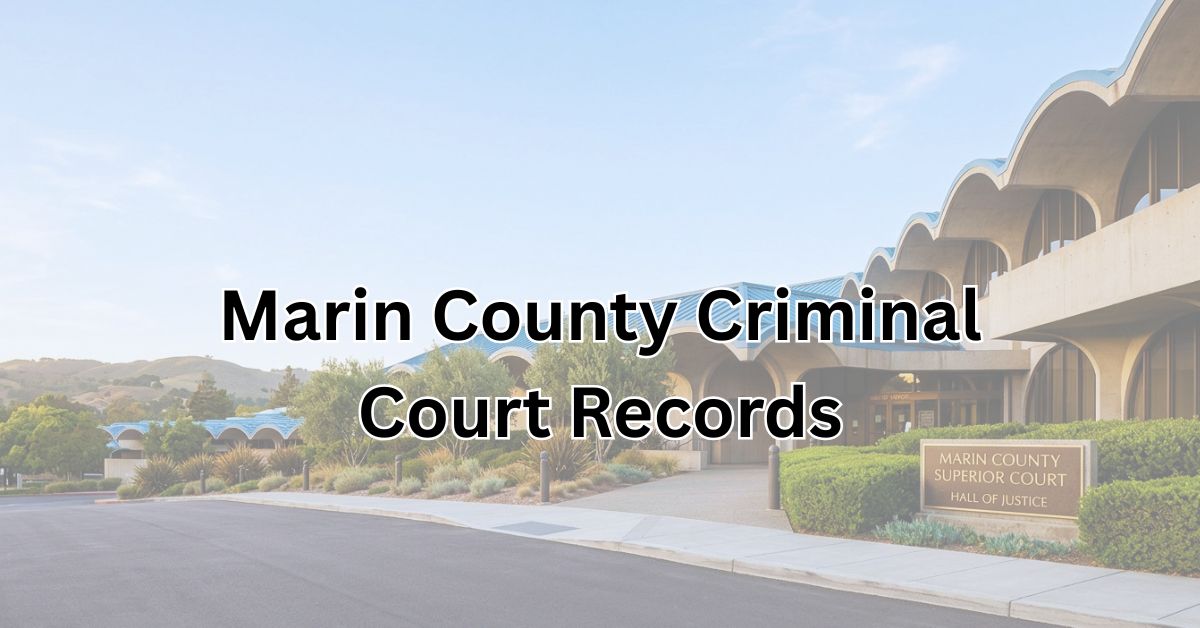
Marin County criminal court records contain case details related to arrests, felony charges, misdemeanor filings, sentencing updates, court hearings, warrants, and judicial actions handled through local courts. These public records help residents, attorneys, reporters, and researchers review criminal proceedings connected to defendants, case numbers, filing dates, and courtroom activity. Many users search these records to check pending charges, verify court outcomes, review hearing schedules, or locate official criminal filings connected to Marin County cases and legal proceedings.
Marin County court databases provide criminal case information through county systems that list party names, docket entries, hearing dates, charge descriptions, bail details, probation terms, and courtroom updates. Public record searches often include traffic crimes, DUI matters, assault charges, theft offenses, probation violations, and felony proceedings filed within county jurisdiction. Online court search tools make case lookup faster for people seeking criminal filings, court status details, judicial records, or recent activity connected to Marin County criminal matters.
How to Search Criminal Court Records Online
Criminal court records can be searched through an official court’s online system that stores public case data. A criminal case lookup through the Marin County Court system works by entering basic details like a name or case number into a digital portal. An online criminal records search pulls case information from a digital court database and public records portal maintained by the court’s judicial record system.
Official Source for Criminal Court Records Search
The main official platform for Marin County criminal court records is the Marin County Superior Court Public Portal. This system provides access to case data, hearings, and public filings.
Official portal (naked URL): https://webportal.marin.courts.ca.gov/PublicPortal/?q=Home
This portal connects directly to the court’s case management system and allows public case searches for criminal, civil, traffic, and family matters.
Criminal Case Lookup Process
A criminal case lookup through the court system follows a structured process. The system collects electronic criminal filings and updates from court activity.
Open the Public Records Portal
Visit the official court site and open the case search section. The system is part of the judicial record system used for storing court activity.
Common sections include:
- Case Search
- Calendar Search
- Court Records
- Public Access Portal
The portal displays data from the digital court database used by the Superior Court.
Select Search Type
Users can choose the type of online criminal records search based on available details:
- Name Search – for searching a person’s criminal cases
- Case Number Search – for direct file lookup
- Calendar Search – for hearing dates
- Court Division Search – for felony or misdemeanor cases
Enter Case Details
The system requires accurate input to return results from the public records portal.
Common inputs include:
- Full defendant name
- Case number
- Filing date range
- Court location
- Case category (criminal case lookup filter)
Even partial data may return results in many systems.
Review Criminal Court Records
Search results display information from electronic criminal filings stored in the system.
Typical case data includes:
- Charges filed
- Arrest details
- Court hearing dates
- Bail or bond status
- Case progress updates
- Judge and courtroom information
These records are updated through the court’s digital court database.
What Criminal Court Records Include
Criminal court records provide structured legal data from court proceedings. These records help track case activity and legal outcomes.
Common record elements include:
- Arrest charges and offense type
- Court hearing schedules
- Case status updates
- Sentencing decisions
- Probation or supervision details
- Warrant information
All data originates from filings processed through the judicial record system.
Tips for Accurate Criminal Case Lookup
Small mistakes can affect search results in an online criminal records search. Correct input improves accuracy.
Helpful tips include:
- Use full legal names when possible
- Try different spelling variations
- Check multiple date ranges
- Review both active and closed cases
- Use case numbers for direct lookup
Limits of Online Criminal Records Search
Some records are not visible in public systems due to legal restrictions.
Restricted records may include:
- Juvenile cases
- Sealed court files
- Expunged criminal records
- Active investigations
- Confidential court matters
These limitations protect privacy and sensitive legal information.
Warrants and Criminal Court Records
Warrants appear in criminal court records as official legal orders tied to criminal proceedings and enforcement actions issued by the court. These records show whether a warrant is active, cleared, or recalled and connect directly with case history and court compliance updates. Criminal court records often include warrant details that help track enforcement status, arrest activity, and judicial decisions. Law enforcement and courts rely on these entries to maintain accurate case tracking within the criminal justice system.
Types of Warrants in Criminal Proceedings
Warrants issued during criminal proceedings authorize law enforcement action based on court approval and legal standards. They become part of criminal court records once entered into the judicial system and linked with a case file. Different warrant types reflect different legal situations and enforcement needs. Each type carries specific consequences depending on the case activity and court orders. These warrants remain active until resolved, recalled, or executed by authorities under court supervision.
- Arrest warrants are issued after probable cause
- Bench warrants issued for missed court appearances
- Judicial enforcement orders for legal compliance
How Warrants Appear in Criminal Court Records
Warrants appear in criminal court records as structured entries stored within a digital court database connected to the judicial record system. These entries are linked directly to criminal cases and show detailed information such as status, issuance date, and related charges. Online criminal records search tools display warrant data alongside hearings, filings, and case updates. This allows users to review enforcement actions and understand the current legal standing of a criminal case.
- Warrant status updates (active, cleared, recalled)
- Case number linking the warrant to proceedings
- Issuing court and judge information
- Related charges and filing dates
Warrant Status in Public Records
Warrant status in criminal court records reflects the current legal condition of enforcement actions issued by the court. Each status shows whether law enforcement still holds authority to act or if the warrant has been resolved. These updates help track case progress within the judicial record system and are often updated after court hearings or law enforcement actions. Public records portals display these changes to keep criminal case lookup data current and organized for users.
- Active warrant indicating ongoing enforcement
- Cleared warrant showing resolution or dismissal
- Recalled warrant removed by court order
- Executed warrant completed by arrest or compliance
Public Access Limits for Warrant Information
Public access to warrant information in criminal court records is restricted in certain situations due to legal privacy rules and case sensitivity. While many warrants appear in online criminal records search systems, some remain hidden or partially visible. Courts limit access to protect ongoing investigations, minors, or confidential proceedings. These restrictions help maintain legal integrity while still allowing general case visibility through public records portals when permitted under law.
- Sealed warrants linked to confidential cases
- Juvenile-related enforcement restrictions
- Active investigation limitations
- Restricted law enforcement entries
Connection Between Warrants and Criminal Court Records
Warrants remain closely connected to criminal court records because they form part of the official case history and judicial enforcement process. They appear alongside criminal proceedings such as hearings, filings, and sentencing updates. Each warrant reflects a specific court action tied to case behavior, including missed appearances or alleged offenses. This connection helps maintain accurate tracking of legal activity within the criminal case lookup system used by courts and law enforcement agencies.
Role of Prosecution in Criminal Cases
The prosecution represents the government in criminal proceedings and presents evidence against the accused in court. It works to prove felony charges or misdemeanor offenses based on facts, witness statements, and legal documents. The prosecution plays a central role in building criminal court records through formal charging decisions and courtroom litigation. Its actions directly influence case direction, plea deals, and final court outcomes within the legal prosecution system.
Responsibilities of the Prosecution in Criminal Proceedings
The prosecution handles all steps involved in presenting a criminal case before the court. It reviews evidence, decides whether charges should be filed, and manages the case throughout criminal proceedings. Prosecutors work closely with law enforcement agencies and prepare arguments for courtroom litigation. Their role also includes evaluating witness credibility and ensuring legal procedures are followed during trial preparation and hearings.
- Review of evidence from investigations
- Filing of criminal charges in court
- Preparation for trial hearings
- Coordination with law enforcement agencies
- Presentation of witness testimony
District Attorney Process in Criminal Cases
The district attorney’s process controls how criminal charges are reviewed and filed in court. A district attorney evaluates police reports and determines whether sufficient evidence exists for prosecution. Once felony charges or other offenses are approved, the case moves into formal court proceedings. This process helps maintain consistency in the legal prosecution system and ensures that only supported cases proceed to trial or plea negotiation stages.
The process typically includes:
- Case intake from law enforcement
- Evidence evaluation and review
- Decision on filing criminal charges
- Assignment of the prosecution team
- Court filing and case initiation
Criminal Charges Filing and Court Action
Filing criminal charges is a key responsibility of the prosecution and becomes part of official criminal court records. Once charges are filed, the case enters the judicial system and moves toward hearings, arraignment, and trial preparation. The prosecution must present legal justification for felony charges or misdemeanor accusations. This filing stage forms the foundation for all future courtroom litigation and determines how the case progresses through the court system.
- Formal filing of charges in court records
- Classification of offense severity
- Assignment of case number
- Scheduling of initial court appearance
- Entry into the criminal proceedings system
Prosecution in Courtroom Litigation
Courtroom litigation involves the prosecution presenting evidence and arguments before a judge or jury. This stage of criminal proceedings determines the outcome of felony charges or other criminal accusations. The prosecution uses witness testimony, physical evidence, and legal reasoning to support the case. It also responds to defense arguments and challenges during trial. Strong presentation during litigation often influences verdicts and sentencing decisions.
- Presentation of evidence and exhibits
- Examination of witnesses in court
- Cross-examination of defense witnesses
- Legal arguments before a judge or a jury
- Final case submission for ruling
Role of Prosecution in the Legal Prosecution System
The legal prosecution system depends on prosecutors to enforce criminal law and maintain fairness in criminal court records. Their role ensures that criminal cases are handled according to legal standards and evidence requirements. Prosecutors also influence plea agreements, case dismissals, and sentencing recommendations. This system helps balance law enforcement actions with judicial review, ensuring structured handling of criminal proceedings across different case types.
Criminal Court Case Status & Judgments
Criminal court case status shows the current stage of criminal proceedings and reflects what has happened during court appearances. A criminal case lookup reveals updates such as pending hearings, resolved matters, or final judgments. These records help track how felony or misdemeanor charges move through the court system. Each status entry connects directly to official criminal court records and shows how a case progresses from filing to final decision.
Case Status in Criminal Proceedings
Case status in criminal proceedings indicates where a case stands in the judicial process at any given time. It changes based on hearings, evidence review, and court decisions. A criminal case lookup often displays status updates that reflect ongoing or completed actions. These updates are recorded in the court system after each appearance or filing, helping users track movement through the legal process.
- Active cases pending trial or hearing
- Ongoing cases under review
- Post-trial cases awaiting judgment entry
- Closed cases with final disposition
Court Appearances and Case Updates
Court appearances play a major role in updating criminal case status and shaping final outcomes. Each appearance allows the court to review evidence, hear arguments, and issue rulings. These sessions are recorded in criminal court records and reflected in the criminal case lookup system. Updates from court appearances often change the status of charges, hearings, or trial schedules.
Court appearances may include:
- Arraignment hearings for the charge reading
- Pre-trial conferences for case review
- Motion hearings for legal requests
- Trial sessions for evidence presentation
- Sentencing hearings after verdicts
Case Disposition in Criminal Records
Case disposition refers to the outcome of criminal proceedings recorded in court systems. It shows how a case ends after all hearings, evidence review, and legal arguments are completed. Criminal case lookup systems display disposition details as part of official criminal court records. This information helps identify whether charges were resolved through trial, agreement, or dismissal.
Common dispositions include:
- Guilty verdicts after trial
- Not guilty verdicts by court or jury
- Dismissed charges due to legal reasons
- Plea agreements between parties
- Deferred judgments with conditions
Sentencing Outcomes in Criminal Cases
Sentencing outcomes define the penalties assigned after a guilty verdict or plea agreement in criminal proceedings. These outcomes are recorded in criminal court records and become part of a defendant’s case history. Sentencing varies based on charge severity, prior record, and court decisions. A criminal case lookup may show details such as jail time, probation, fines, or community service requirements.
Typical sentencing outcomes include:
- Jail or prison sentences
- Probation supervision periods
- Monetary fines or restitution
- Community service obligations
- Court-mandated programs
Dismissed Charges in Criminal Court Records
Dismissed charges appear in criminal court records when the court or prosecution ends a case without a conviction. This outcome may result from lack of evidence, legal issues, or procedural decisions. Criminal proceedings with dismissed charges still remain part of official records but show no guilty finding. A criminal case lookup will list these cases with dismissal notes and case closure details.
Reasons for dismissal may include:
- Insufficient evidence for trial
- Procedural or legal errors
- Witness issues or unavailable testimony
- Prosecutorial discretion decisions
- Successful defense motions in court
Tracking Case Progress Through Criminal Case Lookup
A criminal case lookup system helps track how cases move from filing to final judgment. It reflects all updates from criminal proceedings, including hearings, motions, and sentencing decisions. Each change in status is recorded in criminal court records and displayed through online court systems. This structured tracking helps show the full lifecycle of a case from start to final disposition.
Public Access Rules for Criminal Court Records
Criminal court records are generally open for public case access under court transparency laws. Access depends on the type of criminal proceedings and the sensitivity of the case information, similar to how Marriage & Divorce records may carry certain legal or privacy restrictions in some jurisdictions. Courts provide online and in-person systems where users can review filings, hearings, and case outcomes. Still, some documents remain restricted due to legal privacy protections and state-level rules such as California’s public records law.
Public Case Access in Criminal Proceedings
Public case access allows individuals to review selected criminal court records through official court systems. These records usually include case summaries, hearing dates, and final judgments. Criminal proceedings become part of the public record once filed in court, but visibility varies by case type. Online systems often display basic case data through public records portals while limiting sensitive details.
Common publicly available details include:
- Case numbers and filing dates
- Court hearing schedules
- Charge descriptions
- Case status updates
- Final court outcomes
Sealed Criminal Records and Restrictions
Sealed criminal records are not available for public case access and remain hidden from online systems. Courts seal records to protect privacy or meet legal requirements. Once sealed, these records are removed from most criminal court records databases and cannot be viewed without special authorization. Criminal proceedings involving sensitive matters often fall under this category.
Examples of sealed records include:
- Juvenile-related criminal cases
- Court-approved expungements
- Protected witness cases
- Certain dismissed proceedings under court order
Restricted Court Documents in Criminal Records
Restricted court documents are part of criminal proceedings but are not fully visible to the public. These records may exist in the judicial system, but are blocked from online criminal court records searches. Access is limited to authorized parties such as attorneys, law enforcement, or court officials. This restriction helps maintain confidentiality in sensitive legal matters.
Restricted materials often include:
- Investigation reports tied to active cases
- Confidential evidence files
- Victim identity records
- Certain pre-trial motions
- Law enforcement affidavits
Privacy Protections in Court Record Systems
Privacy protections control how criminal court records are shared with the public. Courts balance transparency with personal data protection during criminal proceedings. These protections limit exposure of sensitive details while still allowing basic public case access. Digital systems often mask or remove private identifiers before displaying records online.
Key privacy protections include:
- Redaction of personal addresses
- Removal of sensitive identifiers
- Limited access to juvenile data
- Controlled release of witness information
- Secure handling of sealed case files
California Public Records Law and Criminal Records
California public records law governs how criminal court records are shared with the public. The law supports transparency while setting limits on sensitive criminal proceedings. It allows public access to most court filings but protects certain records under exemptions. Courts in California follow these rules when publishing online criminal records or responding to record requests.
Key points under the law include:
- Public access to most court filings
- Restrictions on sealed and juvenile cases
- Controlled release of sensitive documents
- Right to request official court records
- Legal exemptions for privacy and safety concerns
Marin County Criminal Court Contact Information
Marin County criminal court contact details help users connect with court administration for criminal hearings, case updates, and record-related questions. The court manages criminal proceedings through its main courthouse and administrative offices. Most communication happens through official phone lines, email contacts, and in-person services at the courthouse. Criminal court records, filing support, and hearing schedules are handled by the clerk’s office and court staff responsible for criminal division services.
Marin County Criminal Court Main Contact Details
Marin County criminal court operates through the Superior Court system, which handles criminal proceedings, hearings, and case processing. Most criminal court records requests and case inquiries are handled through official court communication channels. Users can reach court administration for information about criminal hearings, filing status, or case updates through the official website and clerk office services. The court system maintains centralized communication for all criminal case matters.
Marin County Superior Court official site: https://www.marin.courts.ca.gov/
Clerk Office Contact and Criminal Division Support
The clerk’s office manages criminal court records, filings, and case documentation within the Marin County criminal court. It supports criminal proceedings by processing documents, updating case files, and assisting with record requests. The criminal division handles inquiries related to case status, court scheduling, and filing procedures. Contact details for phone support and departmental communication are listed on the official court website for direct reference.
Common services include:
- Criminal case filing assistance
- Case record management
- Hearing schedule information
- Document processing support
- Criminal court records requests
Courthouse Location and Court Administration Services
Marin County criminal court operates from the main courthouse located in San Rafael, where court administration manages daily criminal proceedings and hearings. This facility handles felony cases, misdemeanor hearings, and related judicial services. Court administration staff coordinate courtroom schedules, case assignments, and record maintenance. Visitors can reach courthouse services for general criminal court records inquiries or procedural support through the listed contact channels.
Courthouse address:
- 3501 Civic Center Dr, San Rafael, CA 94903
Support services include:
- Criminal case processing
- Courtroom scheduling
- Public records assistance
- Filing and documentation support
Hearing Assistance Desk and Criminal Court Administration
The hearing assistance desk supports individuals involved in criminal proceedings by providing information about court appearances, schedules, and case status. This service helps users track criminal hearings and understand courtroom timelines. Court administration staff manage communication between departments and assist with procedural questions related to criminal court records. Most hearing-related updates are coordinated through the criminal division within the court system.
Services available include:
- Hearing date confirmation
- Courtroom assignment details
- Case status inquiries
- Scheduling updates for criminal proceedings
- Administrative support for court sessions
Frequently Asked Questions
Marin County criminal court records often raise common questions related to case searches, hearings, and public access rules. Many users rely on the criminal case lookup system to check updates on charges, court appearances, and final outcomes. These FAQs help clarify how criminal proceedings appear in official records and what information can be viewed online. The answers below reflect how the court system organizes and shares criminal court records through public access tools.
How do I search Marin County criminal court records?
A Marin County criminal case lookup can be done through the official Superior Court online portal. Users enter a name, case number, or filing date to view available criminal court records. The system pulls data from criminal proceedings and displays case status, hearings, and filings. Public criminal records access is available through the court’s electronic search tools, which are updated based on court activity and filings.
What information is included in criminal court records?
Criminal court records contain structured details from criminal proceedings, including charges, hearing dates, and case outcomes. These records also show arrest details, bail information, and sentencing decisions. A criminal case lookup may display both active and closed cases depending on public access rules. Felony case search results often include more detailed entries such as court appearances and judicial rulings.
Can I search felony and misdemeanor cases online?
Yes, felony and misdemeanor cases can usually be searched through the Marin County criminal court online systems. The public records access portal separates case types under different filters. Users can perform a criminal case lookup by selecting case categories or entering search details. Felony case search results often include serious offenses, while misdemeanor cases show lower-level criminal proceedings and related court updates.
What happens during an arraignment hearing?
An arraignment process is the first major step in criminal proceedings where charges are formally presented in court. The defendant is informed of the criminal charges, and a plea is entered. Court records are updated with the hearing outcome, bail decisions, and next court date. This stage becomes part of official criminal court records and affects future case scheduling and status tracking.
Are criminal court records public in Marin County?
Yes, most criminal court records in Marin County are considered public records under California public records law. However, public criminal records access depends on case type and restrictions. Sealed records, juvenile cases, and certain sensitive filings are not available for public viewing. Basic case information, including criminal proceedings and hearing schedules, can usually be viewed through official court databases.